
Search Results
Showing results 21 to 40 of 82

Pop Fly
Source Institutions
In this design challenge activity, learners invent a way to send a Ping-Pong ball flying high enough to catch it - like football with a twist!
Right Foot/Left Foot
Source Institutions
In this activity (2nd on the page), learners conduct a series of tests to find out which foot is more dominant. In other words, are they right-footed or left-footed?
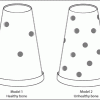
Space Stations: Bones of Contention
Source Institutions
In this activity, learners make models representing bones on Earth and bones that have been in space. They discover what happens to bones without proper exercise and nutrition.
Stepping Out: Hop, Skip, Jump
Source Institutions
In this activity, learners explore and experiment how we can use our bodies everyday to get from one place to another.
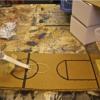
Finger Basketball
Source Institutions
In this activity, learners build mini-basketball courts using cardboard and measuring spoons. Use this activity to introduce learners to catapults, forces, and levers.
Workin' It Out
Source Institutions
In this activity, learners explore how to stay fit the fun way. Learners participate in three physical activities.
Heart to Heart
Source Institutions
In this activity, learners compare ways to measure their heart rates. Learners build their own stethoscopes and learn how exercise affects heart rate.
Relative Speed of Dinosaurs
Source Institutions
In this activity, learners interpret three trackways and use measurements and a formula to infer the relative speed of dinosaurs.
Kites
Source Institutions
In this engineering/design activity, learners make a kite, fly it, and then work to improve the design. Learners explore how their kite design variations affect flight.
Math and Creativity Posters
Source Institutions
These math posters have questions written on them, such as: How many colors can you name in a minute? or How many seconds can you balance on one foot?
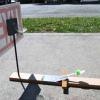
Parabola Basketball
Source Institutions
In this activity, learners build mini-basketball courts and explore the laws of physics. Learners discover that everything you throw or shoot on earth travels in a parabola.
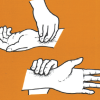
Cardiac Hill
Source Institutions
In this outdoor activity linking human health to the environment, learners use their pulse rates as a measure of the effort expended in walking on different slopes.
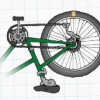
Pedal Power
Source Institutions
In this engineering activity, learners examine bicycle mechanics and gear ratios. Learners determine which gears will help them bike a set course in the shortest amount of time.
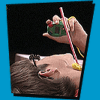
Drinking Straw Pulse Measurer
Source Institutions
In this health activity, learners create a device so that they not only feel their heartbeat, but also see it, using a straw and some clay.
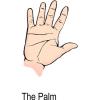
Right Hand/Left Hand
Source Institutions
In this activity (1st on the page), learners conduct a series of tests to find out which of their hands is more dominant. In other words, are they right-handed or left-handed?
Enhanced Water Taste Test
Learners conduct a "blind" taste-test of several types of enhanced or fitness water drinking water that has commercially added substances like vitamins, sugars, or herbs.
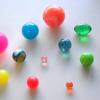
Space Stations: Follow the Bouncing Ball!
Source Institutions
In this activity, learners predict whether a ball on Earth or a ball on the Moon bounces higher when dropped and why.
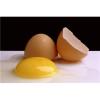
Protect That BRAIN!: Mr. Egghead
Source Institutions
This activity demonstrates the importance of wearing a helmet to protect the brain. An egg is used to symbolize a head with the shell as the skull and the inside of the egg as the brain.
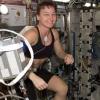
Space Stations: Beans in Space
Source Institutions
In this activity, learners perform 20 arm curls with cans that simulate the weight of beans on Earth versus the weights of the same number of beans on the Moon and in space.
Multi-Variable Relations: Stressed to the Breaking Point
Source Institutions
In this math lesson, learners explore the relationship between the thickness of a spaghetti bridge, the length of the bridge, and the amount of weight that can be supported by the bridge.