
Search Results
Showing results 381 to 400 of 4068
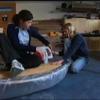
Homemade Hovercraft!
Source Institutions
This activity (on page 2 of the PDF under SciGirls Activity: Hovercraft) is a full inquiry investigation into hovercraft engineering and design optimization.
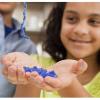
Gummy Shapes
Source Institutions
In this activity, learners use chemistry to “self-assemble” gummy shapes. Learners discover that self-assembly is a process by which molecules and cells form themselves into functional structures.
Exploring Liquids
Source Institutions
Young learners investigate and observe the properties of three liquids -- water, vegetable oil, and corn syrup. They use their senses to collect data and ask and answer questions.
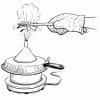
Going for a Spin: Making a Model Steam Turbine
Source Institutions
In this activity, learners explore how various energy sources can be used to cause a turbine to rotate.
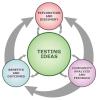
Heating and Cooling of the Earth's Surface
Source Institutions
Learners conduct an experiment to determine the rate at which two materials, sand and water, heat up and cool down.

Shape Up!
Source Institutions
In this activity (25th on the page) about learning and memory, learners explore a training method that animal trainers employ called "shaping." Working in pairs, learners will attempt to "shape" each
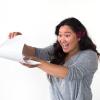
Cylindrical Mirror
Source Institutions
In this activity, learners create a cylindrical mirror to see themselves as others see them.
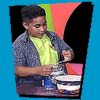
Super Sounding Drum
Source Institutions
In this activity, learners construct drums out of everyday containers (like bowls or food containers) and shrink wrap. Learners use a hair dryer to affix and tighten the shrink wrap to the container.

Screaming Balloon
Source Institutions
In this quick activity (page 1 of the PDF under SciGirls Activity: Extreme Sounds) about sound vibrations, learners will investigate which small objects, such as coins, hex nuts, or marbles, produce t
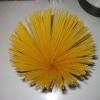
Spaghetti Bridge
Source Institutions
In this engineering activity, learners investigate the differences between the strength of bridges made from flat and round building materials.
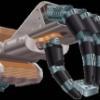
Build Your Own Robot Arm
Source Institutions
In this lesson, learners develop a robot arm using common materials. Learners explore design, construction, and teamwork, as well as materials selection and use.
Vibrant Cords
Source Institutions
In this activity, learners will explore how the voice works and feel the vibrations produced by vocal cords.
Crawdad Grab
Source Institutions
In this outdoor, freshwater activity, learners explore the behavior and food preferences of crawdads (or crabs) by "fishing" for them with various baits.
Step Into Cyberspace
Source Institutions
In this activity, learners discover that they can modify a regular piece of paper so that it's large enough for them to walk through!
Engineering Parachutes
Source Institutions
In this activity, learners will become an engineer by designing and engineering a miniature parachute.
Words in Motion, Motion in Words
Source Institutions
In this art activity (page seven of the pdf), learners will use their creativity to make a "motion collage." Each student will be encouraged to draw a picture of something that moves to be a part of t
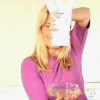
Waterproof Hanky
Source Institutions
In this physics demonstration, learners will be surprised when a handkerchief holds water in an upside-down glass.
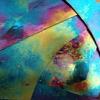
Iridescent Art
Source Institutions
This is a quick activity (on page 2 of the PDF under Butterfly Wings Activity) that illustrates how nanoscale structures, so small they're practically invisible, can produce visible/colorful effects.
What's the Difference?
Source Institutions
In this sorting activity, learners play a game in which they try to identify the largest number of differences between two objects.
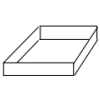
Polynomial and Rational Functions: Building Boxes
Source Institutions
In this math lesson, learners explore polynomial and rational function patterns.