
Search Results
Showing results 41 to 60 of 85
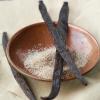
Molecule Match
Source Institutions
In this activity, learners will use their nose to sniff out hidden scents using extracts and cotton balls. Activity includes materials list, game instructions, STEM connections and more.
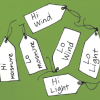
Sensory Hi-Lo Hunt
Source Institutions
In this outdoor activity, learners use only their senses to to find the extremes of several environmental variables or physical factors: wind, temperature, light, slope and moisture.
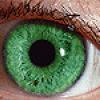
Our Sense of Sight: Eye Anatomy and Function
Source Institutions
In this activity, learners investigate the sense of sight and develop and conduct their own experiments.

Cloud Fun
Source Institutions
Learners complete a series of hands-on and investigative activities to explore cumulus clouds.

Our Sense of Hearing
Source Institutions
In this activity, learners investigate the sense of hearing and plan and conduct their own experiments.
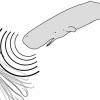
Echolocation in Action!
In this activity, learners simulate whale echolocation. Learners experience echolocation by wearing blindfolds, while another learner makes snapping noises in front of, behind, or to the side of them.
Touch Boards
Source Institutions
Use this activity (13th activity on the page) to introduce learners to the sense of touch. Learners collect objects of varying textures like feathers, rocks, sand, etc.
Become a Neurologist: Detective Threshold
Source Institutions
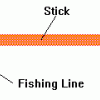
In this neuroscience activity (4th activity on the page), learners make their own set of Von Frey hairs to test detection thresholds.
Mystery Noises
Source Institutions
In this game (4th activity on the page) about hearing, learners test their ability to identify various sounds without looking.
Model Eardrum
Source Institutions
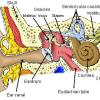
In this activity (last activity on the page), learners make a model of the eardrum (also called the "tympanic membrane") and see how sound travels through the air.
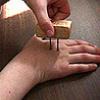
Our Sense of Touch: Two-Point Discrimination
Source Institutions
In this activity, learners investigate the touch sensory system and discover how to plan and carry out their own experiments.
Read With Your Fingers
Source Institutions
In this activity, learners work in partners to create and exchange messages written in Braille. Learners use a Braille key and thumbtacks to write their messages in Braille.
Two Ears are Better Than One: Sound Localization
Source Institutions
This activity (9th activity on the page) about hearing demonstrates to learners the importance of having two ears.
Are you a Supertaster?
Source Institutions
In this activity, learners examine their tongue and taste buds.
Scented Dough
Source Institutions
In this activity, learners follow a recipe to create play dough scented with fruit-flavored drink mix.
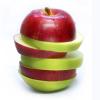
The Nose Knows
Source Institutions
In this activity (2nd activity on the page), learners explore how the nose is responsible for part of the flavor we taste in food.
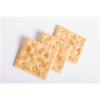
No Saliva, No Taste?
Source Institutions
In this activity (4th activity on the page), learners test to see if saliva is necessary for food to have taste.
Bug Hats
Source Institutions
In this activity, learners use their imaginations and experiment with different materials to create bug hats.

Size It Up
Source Institutions
In this artistic activity, learners blow up a smaller picture into a larger one, by using a grid.
Scent Tracking
Source Institutions
In this wintertime outdoor activity, learners role play wolves tracking their prey by following scented trails.