
Search Results
Showing results 3681 to 3700 of 4068
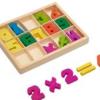
All Things Being Equal
Source Institutions
In this game, learners strategize to win the most cards by building number equations. Learners practice operations (addition, subtraction, multiplication, and division) to construct their equations.
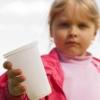
Toss a Score!
Source Institutions
In this math game, learners toss plastic cups to land just right and collect points to win.
The Same Names
Source Institutions
In this math activity, learners make and explore patterns using the letters in their names, a grid, and some colors.

Can Car
Source Institutions
In this physics activity, challenge learners to make a race-car out of a coffee can and rubber band. Demonstrate motion, forces, kinetic and potential energy and friction.
Sea Turtle Populations
Source Institutions
In this activity (on page 2 of PDF under GPS: Sea Turtles Activity), learners will model how a sea turtle population changes over time, from eggs to adults, using puffed rice.
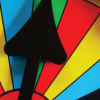
Fair Spinners
Source Institutions
In this math game (Page 9 of the Are You Game? PDF), learners determine what makes a spinner fair or unfair. Learners first play a round with a pre-made spinner that isn't very fair.
Right Ear/Left Ear
Source Institutions
In this activity (4th on the page), learners conduct a series of tests to find out which of their ears is more dominant.
Pattern Families
Source Institutions
In this math activity, learners sort patterns into similar "families" or groups that have the same pattern, but different symbols.
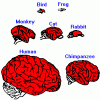
Jump to It!
Source Institutions
This is a quick and simple demonstration about reflexes (second activity on the page).
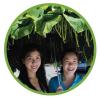
Forces at the Nanoscale: Nano Properties of Everyday Plants
Source Institutions
This is an activity (located on page 3 of PDF under Nasturtium Leaves Activity) about surface tension.
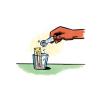
Change in Temperature: Exothermic Reaction
Source Institutions
Learners add calcium chloride to a baking soda solution and observe an increase in temperature along with the production of a gas and a white precipitate. These are all signs of a chemical reaction.
Papel Picado
Source Institutions
En esta actividad, los aprendices exploran la simetría haciendo papel picado, una decoración común en México para las celebraciones.
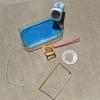
Burst a Bubble
Source Institutions
In this activity, learners will create their own bubble solution. Learners will explore chemistry, geometry and trial and error through this activity.
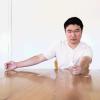
Peripheral Vision
Source Institutions
How far can you see out of the corner of your eye? Grab a partner and find out from the Exploratorium Science Snack.
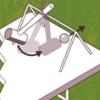
Extreme Kicking Machine
Source Institutions
In this design challenge activity follow up to "Kicking Machine", learners add a hands-free feature to their Kicking Machine.
Can You "See" Thermal Radiation?
Source Institutions
Use this hands-on activity to demonstrate infrared and thermal radiation.
Gelatin Prism
Source Institutions
In this activity, learners make prisms from gelatin. Learners then shine light through the prisms and discover what happens. This activity introduces learners to the idea of refraction.
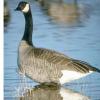
Canada Goose: Explore Trends With Data
Source Institutions
In this activity, learners will explore trends in Canada goose populations using real data from the National Audubon Society's Christmas Bird Count.
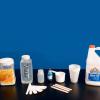
Slime
Source Institutions
Learners make slime from white school glue and Borax detergent. The long chain molecules of the white glue become cross-linked by the Borax into a big network.
¡Agua Cambiante!
Source Institutions
En esta actividad, los aprendices experimentarán con las tres fases del agua. Intentarán controlar la rapidez de los cambios de estado al manipular la temperatura y la presión del agua, hielo, y gas.