
Search Results
Showing results 81 to 100 of 141
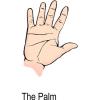
Right Hand/Left Hand
Source Institutions
In this activity (1st on the page), learners conduct a series of tests to find out which of their hands is more dominant. In other words, are they right-handed or left-handed?
Enhanced Water Taste Test
Learners conduct a "blind" taste-test of several types of enhanced or fitness water drinking water that has commercially added substances like vitamins, sugars, or herbs.
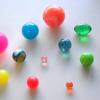
Space Stations: Follow the Bouncing Ball!
Source Institutions
In this activity, learners predict whether a ball on Earth or a ball on the Moon bounces higher when dropped and why.
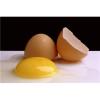
Protect That BRAIN!: Mr. Egghead
Source Institutions
This activity demonstrates the importance of wearing a helmet to protect the brain. An egg is used to symbolize a head with the shell as the skull and the inside of the egg as the brain.
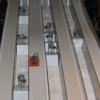
Echo Base Bobsleds
Source Institutions
The goal of this activity is to build a miniature bobsled that is either the fastest or the slowest. Learners use recycled materials to design, build, and test their bobsled on a bobsled track.
Space Stations: Beans in Space
Source Institutions
In this activity, learners perform 20 arm curls with cans that simulate the weight of beans on Earth versus the weights of the same number of beans on the Moon and in space.
Multi-Variable Relations: Stressed to the Breaking Point
Source Institutions
In this math lesson, learners explore the relationship between the thickness of a spaghetti bridge, the length of the bridge, and the amount of weight that can be supported by the bridge.

Pitch, Roll and Yaw: The Three Axes of Rotation
Source Institutions
In this activity (page 87 of the PDF), learners move their bodies to better understand the three axes of rotation: pitch, roll and yaw.
The Pulse is Right
Source Institutions
In this online activity, learners measure their pulse rates and investigate how their pulses change when they engage in different activities.
How Many In a Minute
Source Institutions
In this activity, learners will keep track of how much they can do in one minute. Instructors can pick something everyone will do for a minute, such as jumping up and down or drawing stars.
Slowing the Flow
Source Institutions
In this experiment, pairs of learners explore how cold water affects circulation. The mammalian diving reflex (MDR) slows circulation when the body is exposed to cold water.

Statistics: Steppin' Out
Source Institutions
In this math lesson, learners construct box-and-whisker plots to analyze and compare data sets. Learners investigate whether or not long-legged people run faster than short-legged people.
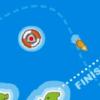
Cup Sailing Game
Source Institutions
In this online Flash game, learners will captain a sailing challenge, adjusting boat direction and sails, seeking the way to take greatest advantage of varying wind speeds and directions to catch the
Get-Moving Game
Source Institutions
In this invention challenge activity, learners create an indoor game for one or two people that gets you moving.
Crunch Time
Source Institutions
In this quick and easy activity and/or demonstration, learners use two empty 2-liter bottles and hot tap water to illustrate the effect of heat on pressure.
Race for Survival
Source Institutions
During this interactive "survival" game, students learn about the importance of camouflage and how it helps animals to blend into their surroundings, as either predator or prey.
Filling the Time
Source Institutions
Build time sense into the schedule by asking learners to predict what can happen in a certain amount of time: We have 20 minutes before outdoor time. What can you get done?
Catch the Beat
Source Institutions
This is an activity about music, movement, and math. Learners will start a rhythm pattern with 2, 3, or 4 beats. For instance, tap your foot, jump, clap, repeat.
Active Graphs
Source Institutions
In this activity, learners track their movements with jumping and leaping graphs.
Take a Hike!: A Family Forest Walk
Source Institutions
In this family or group inquiry activity, learners use their senses to explore a local forest or woodland.